
Dr. Shinichi Suzuki
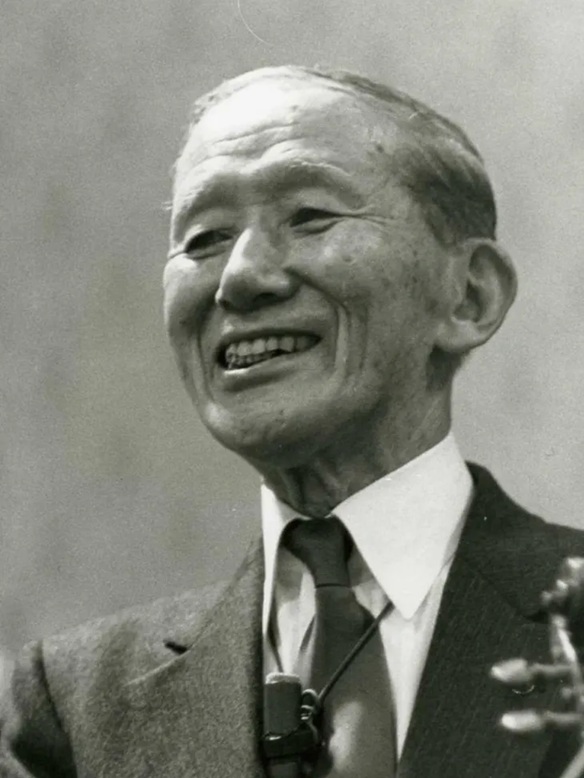
Dr. Shinichi Suzuki (1898–1998) was a pioneering Japanese educator, philosopher, and violinist who forever transformed the landscape of music education through the development of what is now known as the Suzuki Method. Inspired by the way children learn to speak their native language—with ease, repetition, and immersion—Dr. Suzuki believed that musical ability is not a talent reserved for a few, but a skill that can be developed in any child when nurtured in the right environment.
Born in Nagoya, Japan, Dr. Suzuki’s early exposure to Western music came through recordings, and he later studied violin in Germany under renowned violinist Karl Klingler. It was during his time abroad that Suzuki observed how children effortlessly acquired language through listening, imitation, and loving encouragement. This observation laid the foundation for his revolutionary idea: that children could learn music in the same natural and joyful way they learn to speak.
In the years that followed, he established a method of instruction grounded in early childhood education, parental involvement, repetition, and positive reinforcement. The method was first developed for the violin, but its principles were so effective that they have since been adapted for a wide range of instruments, including viola, cello, piano, flute, recorder, and guitar, among others.
Today, the Suzuki Method is practiced in over 50 countries, embraced by thousands of teachers, and celebrated for not only producing skilled musicians but also nurturing values such as discipline, compassion, perseverance, and confidence.
Dr. Suzuki’s enduring legacy is more than a music teaching method—it’s a philosophy of life that continues to inspire educators, parents, and children around the world to believe that “Every Child Can.”